Sound ground. Sound decisions.
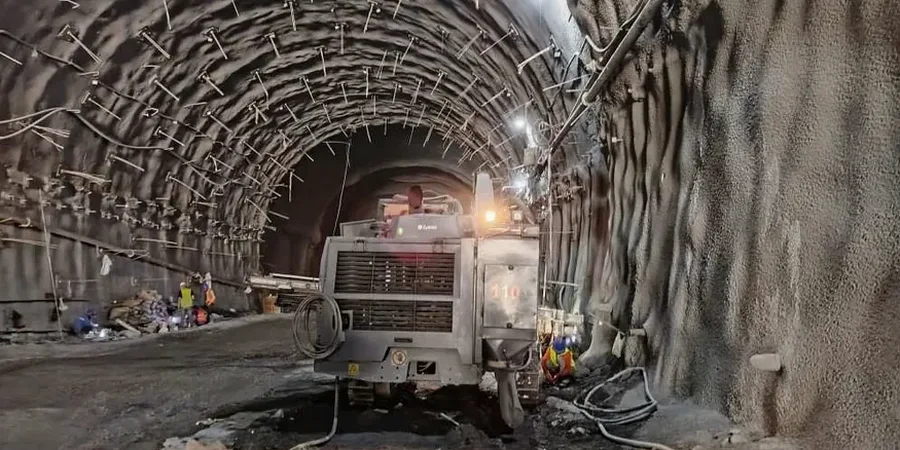
LEARN MOREUnderground excavations in Belfast encompass the full spectrum of subterranean construction activities, from deep basements and cut-and-cover tunnels to mined passages and infrastructure chambers. This category is critical to the city's ongoing regeneration, where maximising below-ground space allows for densification in built-up areas such as the Titanic Quarter and the city centre, while preserving the historic streetscape above. A thorough understanding of ground behaviour, groundwater control, and structural support sequencing is essential to deliver these excavations safely and efficiently, particularly given the variable geological conditions encountered across the city.
Belfast's subsurface is dominated by the Triassic Sherwood Sandstone and Mercia Mudstone groups, often overlain by complex sequences of glacial till, glaciofluvial sands and gravels, and soft compressible estuarine clays of the Belfast Sleech. The highly variable thickness and engineering properties of these superficial deposits pose significant challenges for excavation stability and dewatering design. The Sherwood Sandstone aquifer is a key consideration, requiring careful management of groundwater inflows and uplift pressures during both temporary and permanent works stages. A robust geotechnical design of deep excavations must account for these strata transitions and the potential for perched water tables within the glacial sequence.
All underground excavation works in Northern Ireland must comply with the Construction (Design and Management) Regulations (NI) 2016, placing explicit duties on clients, designers, and contractors to manage health and safety risks throughout the project lifecycle. The technical execution relies heavily on Eurocode 7 (BS EN 1997-1 and BS EN 1997-2) and its UK National Annex, which govern geotechnical design through limit state principles. For temporary works, BS 5975:2019 provides the procedural framework for design and checking, while the CIRIA C760 guidance on embedded retaining walls is the definitive reference for deep excavation support systems. Groundwater control is typically designed in accordance with CIRIA C750, ensuring that dewatering and depressurisation strategies protect both the excavation and adjacent assets.
Typical projects that demand this category of expertise include multi-storey basement car parks and commercial foundations, utility tunnels and service diversions, cut-and-cover sections of transport corridors, and deep shafts for pumping stations or combined sewer overflows. The increasing integration of geothermal energy loops into embedded retaining walls and base slabs also requires a seamless blend of structural and geotechnical underground excavation design. For any project where ground movements could impact neighbouring buildings or infrastructure, a tailored geotechnical excavation monitoring plan becomes indispensable, linking real-time displacement and vibration data back to trigger levels defined during design.
The principal risks arise from the highly variable glacial till and soft estuarine Belfast Sleech overlying the Sherwood Sandstone aquifer. Unexpected sand lenses can cause sudden water inflows, while the Sleech's low shear strength demands robust support sequencing. Managing groundwater in the sandstone without triggering ground loss or settlement in overlying soft clays is a persistent challenge requiring careful dewatering and exclusion system design.
Temporary works design must follow BS 5975:2019 for procedural control, while geotechnical design adheres to Eurocode 7 and its UK National Annex. The Construction (Design and Management) Regulations (NI) 2016 enforce overarching health and safety duties. CIRIA C760 provides essential guidance for embedded retaining walls, ensuring limit states are adequately checked for all construction stages.
A monitoring plan is essential whenever the predicted ground movements could affect adjacent structures, utilities, or transport infrastructure. It is triggered by the risk assessment process in CDM and Eurocode 7. The plan defines instrumentation such as inclinometers, extensometers, and vibration monitors, linking real-time data to pre-determined trigger levels that mandate contingency actions if exceeded.
The aquifer dictates the dewatering and cut-off strategy. For deep excavations, a combination of perimeter embedded walls keyed into the Mercia Mudstone and internal depressurisation wells is often needed to control base heave and uplift. The design must balance lowering groundwater sufficiently for stability while minimising regional drawdown that could cause consolidation settlement in overlying compressible soils.