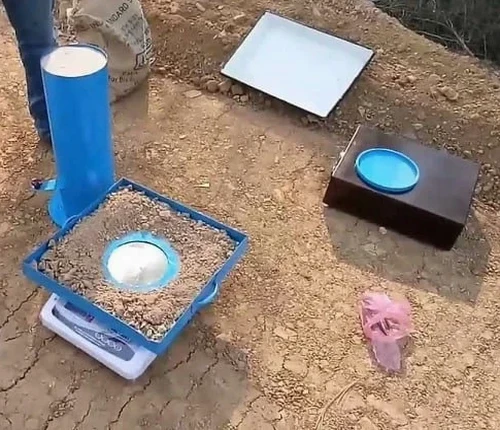
Contractors in Belfast occasionally face a preventable failure: trench reinstatement settlement on arterial roads like the A55 Outer Ring. The root cause often traces back to inadequate compaction verification. A Proctor test establishes the laboratory maximum dry density, but the sand cone method provides the in-situ confirmation that backfill has been placed to specification. Without this direct measurement, assumptions about lift thickness and roller passes create risk. The sand cone test—conducted to BS 1377-9—delivers a field density value within 30 minutes, allowing the crew to adjust compaction effort before the next lift is placed. On sites underlain by glacial till, where cobbles and boulders complicate nuclear gauge readings, the sand cone remains the most reliable alternative.
A road's design life depends on density achieved in the first 300 mm. The sand cone proves it with a physical measurement, not a correlation.