Roadway engineering in Belfast encompasses the comprehensive planning, design, construction and maintenance of pavement structures that form the backbone of the city's transport network. From arterial routes like the Westlink to residential estate roads and industrial access ways, every project demands a tailored approach that balances structural integrity, durability and cost-effectiveness. The region's maritime climate, with persistent rainfall and moderate temperature swings, places unique demands on pavement materials and drainage design, making local expertise essential for long-term performance. A well-designed roadway not only supports economic activity but also enhances road safety and reduces whole-life maintenance costs for public and private clients alike.
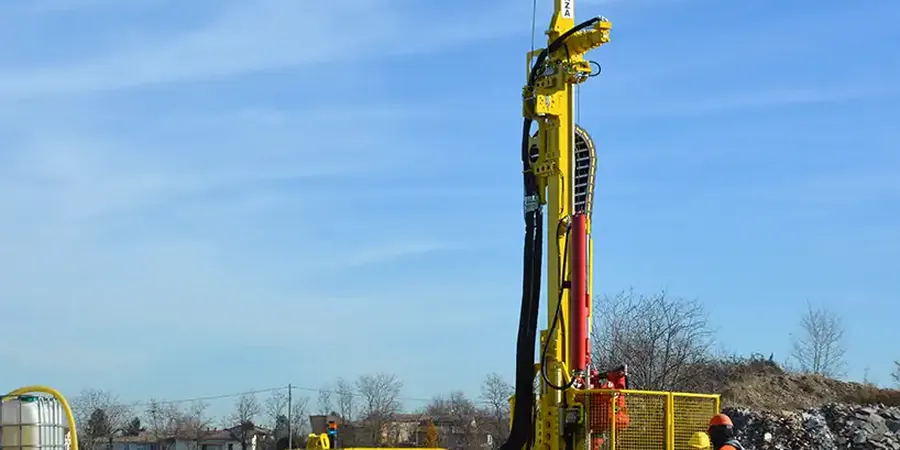
Belfast's underlying geology presents both opportunities and challenges for roadway designers. Much of the city is underlain by glacial till deposits, comprising a variable mixture of clays, silts, sands and gravels left by retreating ice sheets. These superficial deposits often overlie the Triassic Sherwood Sandstone or Carboniferous mudstones and siltstones, creating complex subgrade conditions that can vary significantly over short distances. The presence of soft alluvial clays along the River Lagan corridor and its tributaries introduces additional risks of differential settlement and reduced bearing capacity. A thorough CBR study for road design is therefore fundamental to assess subgrade strength and inform pavement thickness calculations, ensuring the foundation can support anticipated traffic loads without premature deformation.
Pavement design in Northern Ireland follows the principles set out in the Design Manual for Roads and Bridges (DMRB), specifically Volume 7, which is adopted by the Department for Infrastructure (DfI). The DMRB provides a rigorous framework for both flexible and rigid pavement options, with key standards including HD 26/06 for flexible pavements and HD 27/06 for rigid pavements. These documents define traffic categories based on commercial vehicle flows, prescribe material specifications and outline performance-based design approaches. For local roads and minor schemes, the guidance in the IAN 73/06 and the Specification for Highway Works (SHW) Series 700-900 remain the definitive references. Adherence to these standards is mandatory for publicly funded schemes and represents best practice for private developments throughout Belfast.
The choice between pavement types depends on site-specific factors including traffic loading, ground conditions and construction programme constraints. Flexible pavement design remains the predominant solution for Belfast's road network, utilising bituminous bound layers over granular foundations to distribute loads through the structure. This approach offers advantages in terms of initial cost, ease of staged construction and simplicity of future maintenance interventions. For heavily trafficked junctions, bus lanes or industrial yards where rutting resistance is paramount, rigid pavement design using jointed concrete slabs provides superior long-term performance and reduced maintenance frequency. The decision between these options requires careful evaluation of whole-life costs, embodied carbon and traffic management implications during construction.
Roadway pavement design in Northern Ireland is governed by the Design Manual for Roads and Bridges (DMRB), specifically Volume 7, as adopted by the Department for Infrastructure. Key standards include HD 26/06 for flexible pavements and HD 27/06 for rigid pavements, supplemented by the Specification for Highway Works Series 700-900. These documents define traffic categories, material specifications and performance requirements for all publicly funded highway schemes.
Belfast's ground conditions are dominated by glacial till deposits overlying sandstone or mudstone bedrock, with soft alluvial clays along river corridors. These variable subgrade conditions directly influence pavement thickness and material selection. Weak or compressible soils may require stabilisation, deeper capping layers or geosynthetic reinforcement to achieve the required long-term bearing capacity and prevent differential settlement under traffic loading.
Flexible pavements distribute traffic loads through multiple bituminous and granular layers, with the load spreading through aggregate interlock and binder cohesion. Rigid pavements rely on the flexural strength of concrete slabs to bridge minor subgrade irregularities, transmitting loads over a wider area. Flexible options suit most general road applications, while rigid designs excel under heavy, channelled traffic or where chemical resistance is needed.
A California Bearing Ratio (CBR) study is required for virtually all roadway projects to determine the subgrade strength for pavement design. It is essential during the design phase to calculate appropriate pavement layer thicknesses according to DMRB standards. Projects on greenfield sites, those encountering variable ground conditions, or schemes involving road widening where existing subgrade performance is unknown all require thorough CBR investigation.