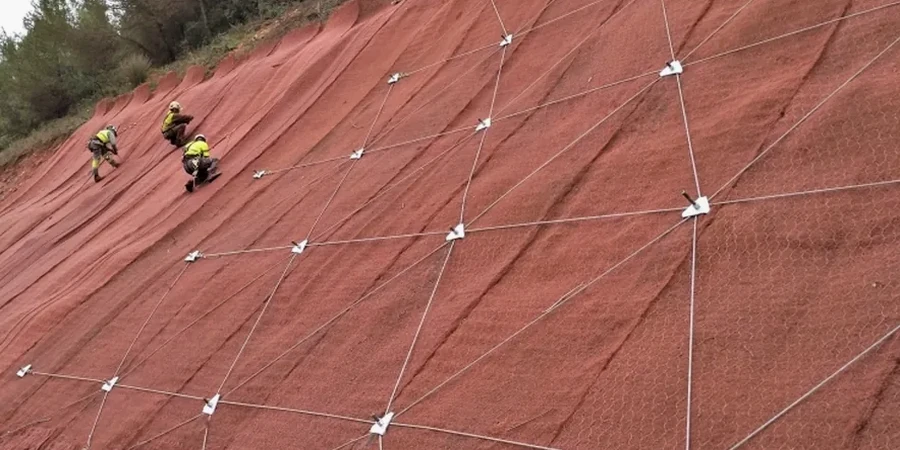
In Belfast’s dynamic built environment, the Slopes & Walls category encompasses the specialised geotechnical engineering required to manage ground retention, excavation support, and natural or man-made slope stability. From the basalt escarpments of Cave Hill to the soft estuarine deposits of the Lagan Valley, the city’s varied terrain demands rigorous assessment and design to prevent landslides, retain earth, and safeguard infrastructure. Whether for a city-centre basement dig or a suburban housing development on a hillside, these services are fundamental to managing risk, ensuring safety, and complying with local planning conditions. Understanding ground behaviour through targeted investigation and analysis is the first critical step in any project that alters the existing ground profile.
Belfast’s geology presents a distinct set of challenges that directly influence slope and wall engineering. The city is underlain by a complex sequence of Triassic sandstones and mudstones, overlain in many areas by glacial tills and, critically, the soft, compressible alluvial clays known locally as ‘sleech’ along the river corridors. These weak soils can be prone to instability when surcharged or excavated, making in-situ permeability testing essential for accurate slope stability analysis. The presence of perched groundwater tables within weathered bedrock and granular till layers frequently acts as a trigger for slope failures, demanding a detailed understanding of pore water pressures. Consequently, retaining structures here must be designed not just for static earth pressures but for often challenging hydrogeological conditions.
The regulatory framework governing this work in Northern Ireland is stringent, with the primary standard being Eurocode 7: Geotechnical Design (BS EN 1997-1), accompanied by its UK National Annex. This requires designs to be based on a clear definition of Geotechnical Categories, with a mandatory limit state analysis for ultimate and serviceability conditions. For retaining walls and slopes, specific guidance is drawn from BS 8002:2015 (Code of practice for earth retaining structures) and BS 6031:2009 (Code of practice for earthworks). Planning authorities in Belfast, particularly in areas with known instability or within the Lagan Valley Regional Park, will frequently mandate a detailed geotechnical risk assessment and design report as part of any submission involving excavations over 1.2 metres or new retaining structures.
Projects requiring these specialists are diverse and widespread across the city. The redevelopment of former industrial ‘brownfield’ sites in the Titanic Quarter often necessitates deep excavations for multi-storey basements, secured by robust temporary and permanent retaining wall designs. Infrastructure upgrades, such as the Belfast Transport Hub, involve complex slope cuttings and mechanically stabilised earth walls to support new rail alignments. In the residential sector, developments on the fringes of the Belfast Hills require careful assessment of cut-and-fill slopes, often stabilised using soil nailing or active/passive anchor designs. Even smaller-scale domestic projects, like a garden terrace on a sloping site, can fall within the scope of these regulations if they affect neighbouring land stability.
A slope stability problem typically involves assessing the risk of failure in an existing natural or engineered soil/rock slope, often influenced by groundwater and weathering. A retaining wall design, conversely, is required when you need to create a near-vertical change in ground elevation, actively supporting a soil mass to prevent it from collapsing laterally. The former is often an analytical assessment, while the latter is a proactive structural solution.
A geotechnical investigation is mandatory for virtually all permanent retaining structures and significant slope works under Eurocode 7 and local building control. In Belfast, due to the variable ground conditions including soft ‘sleech’ clays, any wall over 1.2 metres high, any slope cut steeper than 1:2, or any project near a boundary will require a site-specific investigation to determine soil parameters, groundwater levels, and appropriate design strength values.
Common types include cantilever reinforced concrete walls for moderate heights, embedded sheet pile walls for soft alluvial soils near the Lagan, and gravity gabion or crib walls for landscaping in hillside areas. Secant piled walls are frequently specified for deep basements in the city centre where ground movement must be minimised adjacent to existing structures. The choice is dictated by soil strength, groundwater, and site access constraints.
Groundwater is often the single most critical factor. Unrelieved hydrostatic pressure behind a wall can double the lateral load, leading to structural failure or unacceptable tilting. In Belfast’s glacial till and alluvial deposits, perched water tables are common. Effective design must incorporate drainage measures such as weep holes, granular backfill drains, or geocomposite drainage layers to permanently relieve water pressure and ensure long-term stability.