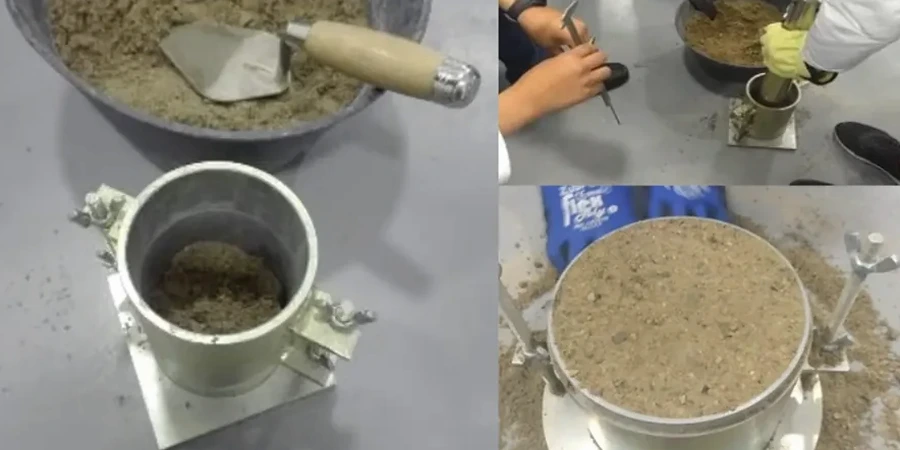
The most common mistake we see on Belfast sites is a contractor rolling fill with the wrong moisture content and wondering why the plate test fails six months later. It happens because someone skipped the lab phase and guessed the optimum based on a material that looked similar. Belfast ground doesn't work that way. The glacial till across the city, from the Lagan valley up to the Antrim plateau, can shift from sandy gravel to stiff clay within fifty metres. Without a Proctor test on the exact borrow source, you are gambling with every lift. We run both standard and modified compaction procedures under BS 1377-4, and the result is a tight moisture-density curve that tells the site team exactly where to aim. For road sub-base on the A55 or a foundation pad in Titanic Quarter, the cost of one failed density test on site far exceeds the lab fee. When the material is borderline, we often pair the Proctor with a grain size analysis to confirm whether the grading envelope even supports the specified compaction target.
A Proctor curve is not a formality. It is the single number that tells your roller driver when to stop wetting and when to start compacting.