GEOTECHNICAL ENGINEERING
BELFAST
HomeUnderground ExcavationsGeotechnical design of deep excavations

Geotechnical Design of Deep Excavations in Belfast | BS EN 1997 Compliance

Sound ground. Sound decisions.

LEARN MORE

Belfast sits on some of the most challenging and varied Quaternary deposits in the UK, from the soft, compressible estuarine clays of the 'Belfast Sleech' to dense lodgement tills left by retreating ice sheets. With over 340,000 residents in the metropolitan area and a construction boom reshaping the Titanic Quarter and city centre, the demand for multi-level basements and infrastructure cuts has never been higher. A deep excavation in this post-glacial terrain is not a standard exercise: the rapid transition from stiff till to soft clay within a single site demands a ground model of exceptional resolution. Our approach to geotechnical design integrates site-specific stratigraphy with BS EN 1997-1:2004 design principles, ensuring that temporary and permanent works are stable, serviceable, and sensitive to the urban environment. For projects where the bedrock profile is critical, we often pair the ground investigation with a seismic refraction survey to map the depth to competent Sherwood Sandstone before finalising the shoring geometry.

In Belfast's glacial terrain, the governing design case is rarely wall stability—it's the protection of Victorian infrastructure from millimetre-scale movement.
Our service areas

Methodology and scope

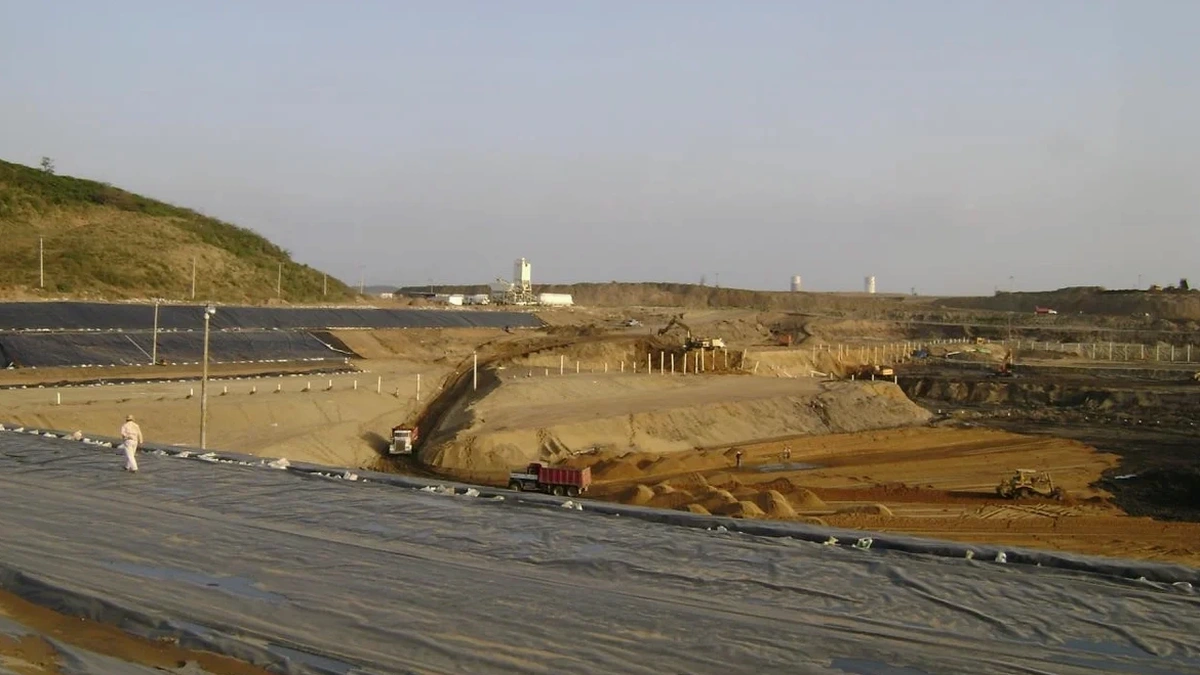
A deep excavation in Belfast typically begins with a thorough desk study and a ground investigation that captures the full transition from made ground through the complex glacial sequence. The design of a retaining wall, whether a secant pile wall in water-bearing sands or a sheet pile cofferdam in the Sleech, hinges on the accurate derivation of undrained shear strength and stiffness parameters. We use a combination of in-situ testing, such as SPT and CPT, and high-quality laboratory testing, including triaxial and oedometer tests, to feed a hardening soil model with small-strain stiffness. This is not just about ultimate limit state: the serviceability of adjacent infrastructure, particularly the historic brick sewers and masonry buildings of the Linen Quarter, often governs the allowable wall deflection. Groundwater control is a separate and equally critical design thread; the perched water tables in the granular lenses within the till require a carefully staged dewatering plan, often validated through pumping tests, to prevent base heave or piping. A staged excavation sequence, modelled in PLAXIS or similar finite element software, allows us to optimise prop levels and embedment depths while respecting the tight site constraints typical of central Belfast.
Geotechnical Design of Deep Excavations in Belfast | BS EN 1997 Compliance
Technical reference — Belfast

Local considerations

BS EN 1997-1:2004 requires that we consider all limit states, but in Belfast the most insidious risk is often hydraulic failure. The granular lenses within the glacial till can carry artesian pressures that are not immediately obvious from a few boreholes; a base heave or piping failure can develop rapidly if the base of the excavation is not adequately relieved or sealed. The second major risk is the impact on adjacent structures. The low-height, load-bearing masonry buildings in areas like the Cathedral Quarter are exquisitely sensitive to differential settlement. A cantilever wall deflection of just 0.2% of the retained height—well within structural tolerances for the wall itself—can induce cracking in a neighbouring building, leading to costly third-party claims. We address this through a rigorous Observational Method, with trigger levels for wall deflection and groundwater drawdown that are agreed with the client and the local authority before shovels hit the ground. Continuous excavation monitoring with inclinometers, piezometers, and precise levelling provides the feedback loop that keeps the design assumptions honest and the adjacent properties safe.

Need a geotechnical assessment?

Reply within 24h.

Email: contact@geotechnical-engineering.biz

Applicable standards

BS EN 1997-1:2004 (Eurocode 7: Geotechnical design), BS 5930:2015 (Code of practice for ground investigations), CIRIA C760 (Guidance on embedded retaining wall design), BS EN 1993-5:2007 (Eurocode 3: Design of steel structures – Piling)

Technical parameters

ParameterTypical value
Typical excavation depth (city centre)6 m to 18 m below street level
Primary design standardBS EN 1997-1:2004 + UK National Annex
Characteristic soil: Belfast Sleechcu = 15–35 kPa, very soft to soft silty clay
Characteristic soil: Glacial Tillcu = 75–200 kPa, firm to stiff sandy clay
Bedrock (Sherwood Sandstone)UCS 5–25 MPa, moderately weak to moderately strong
Groundwater control methodsDeep wells, ejector systems, or vacuum-assisted wellpoints
Typical retaining systemsSecant piled walls, contiguous piles, sheet piles
Analysis methodFEM (HSsmall model) with staged construction simulation

Frequently asked questions

What are the particular challenges of deep excavations in the Belfast Sleech?

The Sleech is a very soft, normally consolidated estuarine clay with low undrained shear strength, typically 15–35 kPa. Its low permeability means that consolidation-related settlements can continue for months after construction. Design must account for large lateral wall deflections, potential basal heave, and the sensitivity of the clay to disturbance during wall installation. We typically specify CFA or bored piles rather than driven sheets to minimise vibration, and we model the undrained behaviour for the short-term condition with a coupled consolidation analysis for the long term.

How do you protect adjacent historic buildings during excavation?

We establish a detailed condition survey and a settlement risk assessment before design begins. The retaining wall design is then governed by a serviceability limit state, often limiting horizontal deflection to 0.15%–0.2% of the retained height. We use the Observational Method, with inclinometers in the wall, piezometers behind it, and precise levelling points on neighbouring facades. Trigger levels are set for both movement and groundwater change, with contingency measures—such as additional props or re-pressurisation wells—defined in advance.

What is the typical cost range for the geotechnical design of a deep excavation in Belfast?

The geotechnical design scope for a deep excavation in Belfast, including ground investigation interpretation, retaining wall design, dewatering design, and FE modelling, typically ranges from £1,820 to £7,300 depending on the complexity of the site, the depth of the excavation, and the number of construction stages to be analysed.

Do you design both temporary and permanent retaining solutions?

Yes. We design both temporary works, such as a sheet pile cofferdam with internal bracing for a construction-phase basement, and permanent works, such as a secant pile wall that forms part of the final building structure. For permanent walls, we also consider durability requirements, waterproofing details, and long-term creep effects in the soil.

Location and service area

We serve projects across Belfast and surrounding areas.

View larger map