GEOTECHNICAL ENGINEERING
BELFAST
HomeFoundationsPile foundation design

Pile Foundation Design Belfast | Site-Specific Deep Foundations

Sound ground. Sound decisions.

LEARN MORE

Belfast sits on the Triassic Sherwood Sandstone, but that bedrock is often buried under 10 to 30 metres of glacial till and soft estuarine clays known locally as sleech. We have logged these deposits on sites from the Titanic Quarter to the Lagan riverfront. Shallow footings rarely work here. When the competent stratum is that deep, we design driven or bored piles that transfer structural loads past the compressible layers. The CPT test is our preferred method for continuous profiling in these soft clays, giving us a clear picture of undrained shear strength before we select pile type and length.

In Belfast till, end-bearing piles on sandstone can mobilise base resistances of 2,500 to 4,000 kPa, but only if the pile toe is properly cleaned and inspected.
Our service areas

Methodology and scope

With over 340,000 residents and a building stock that mixes 19th-century masonry with modern steel-frame construction, Belfast demands foundation solutions that respect neighbouring structures. Vibration from driven piles can damage adjacent party walls in the Cathedral Quarter. In those cases we specify CFA or rotary bored piles installed under bentonite support. Our pile design follows BS EN 1997-1:2004 and the UK National Annex, with pile load tests carried out to BS 8004. We check axial capacity, negative skin friction from fill, and lateral response under wind and crane loads. Settlement is calculated using the Randolph and Wroth method for single piles, then grouped interaction factors for the pile cap. Every design is backed by site-specific soil parameters from our in-house laboratory.
Pile Foundation Design Belfast | Site-Specific Deep Foundations
Technical reference — Belfast

Local considerations

A 10-storey hotel near the Lagan weir hit sleech at 4 metres depth during site investigation. The developer had planned pad footings. Changing to driven precast piles meant re-analysing the entire lateral load path because the soft clay offered almost no passive resistance to the pile cap. We had to prove through P-y analysis that the piles alone could handle lateral wind and seismic loads for UK seismicity levels. The alternative was a much more expensive contiguous piled wall. The lesson: on riverside sites in Belfast, assume deep soft deposits until you have CPT soundings in hand. The cost of a design change during construction is an order of magnitude higher than a proper pile design from tender stage.

Need a geotechnical assessment?

Reply within 24h.

Email: contact@geotechnical-engineering.biz

Applicable standards

BS EN 1997-1:2004 Eurocode 7 Geotechnical design, BS 8004:2015 Code of practice for foundations, BS 5930:2015 Code of practice for ground investigations, ICE Specification for Piling and Embedded Retaining Walls (SPERW 2017)

Technical parameters

ParameterTypical value
Typical pile depth to sandstone12–28 m
Undrained shear strength (sleech)15–40 kPa
SPT N-value in glacial till25–50 blows/300 mm
Pile load test standardBS 8004:2015
Design standardBS EN 1997-1:2004
Negative skin friction consideredYes, in fill & compressible layers
Common pile diameters450 mm to 900 mm

Frequently asked questions

What is the typical pile depth in central Belfast?

It depends entirely on the bedrock profile. In the city centre and docks area, competent Sherwood Sandstone is commonly encountered between 12 and 28 metres below ground level. We determine the exact depth via CPT soundings and rotary boreholes before designing the pile length.

How much does a pile foundation design cost in Belfast?

For a typical commercial or residential project in Belfast, pile foundation design fees range from £1,440 to £4,740 depending on the number of piles, the complexity of the ground profile, and whether pile load testing and dynamic analysis are included.

Which piling method is best for sites with soft clay in Belfast?

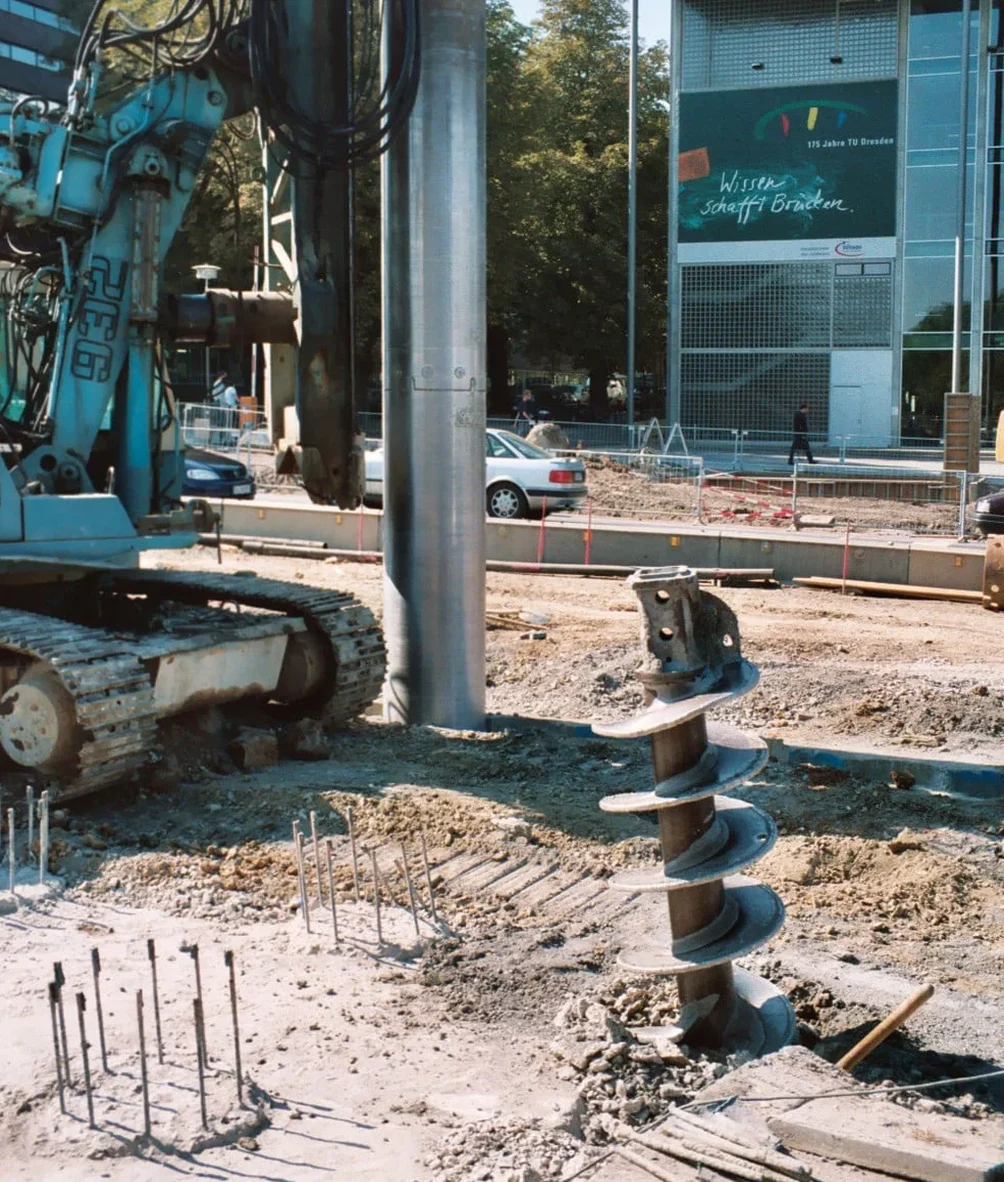
In areas with thick sleech deposits, such as the Lagan riverside, continuous flight auger piles or rotary bored piles with temporary casing are preferred. They minimise ground disturbance and can be installed without the vibration issues associated with driven piles, which is critical when working adjacent to existing structures.

Location and service area

We serve projects across Belfast and surrounding areas.

View larger map