GEOTECHNICAL ENGINEERING
BELFAST
HomeSlopes & WallsSlope stability analysis

Slope Stability Analysis in Belfast – Geotechnical Risk Assessment for Development

Sound ground. Sound decisions.

LEARN MORE

Belfast grew fast during the linen and shipbuilding booms. Victorian engineers built into the Lagan Valley floor and up the Castlereagh Hills without modern geotechnical codes. That legacy still affects development today. Oversteepened cuts in weathered till, old railway embankments, and housing on valley sides all need stability verification before any adjacent work begins. We provide slope stability analysis under BS EN 1997 that matches the geological reality of the city. Shallow landslides in the Belfast Upper Formation are well documented. A desk study alone is not enough. When site investigation reveals soft clay lenses or perched groundwater, combining our analysis with targeted test pits gives the stratigraphic detail needed for reliable factor-of-safety calculations.

A 2-degree error in till friction angle can halve the calculated factor of safety on a 12-metre Belfast slope.
Our service areas

Methodology and scope

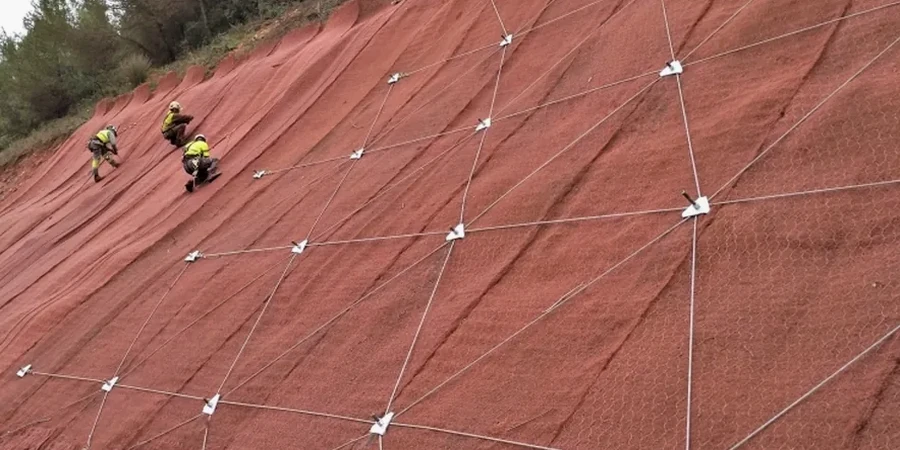
Glacial till across Belfast varies from stiff sandy clay to soft laminated silt with stone lenses. Shear strength parameters cannot be assumed from generic tables. Our lab runs consolidated-undrained triaxial with pore pressure measurement on Shelby tube samples, paired with triaxial multistage testing to define the effective stress failure envelope for each stratum. Depth to bedrock across the city can change from 3 metres in the Four Winds area to over 20 metres near the Lagan estuary. Where slope geometry is constrained by adjacent structures, we incorporate anchors into the stability model to assess reinforced slope options that preserve the development footprint. All analysis uses proprietary geotechnical software calibrated to UK practice, with output reviewed by a chartered engineer under our UKAS-accredited laboratory quality system.
Slope Stability Analysis in Belfast – Geotechnical Risk Assessment for Development
Technical reference — Belfast

Local considerations

Belfast sits at roughly 3 metres above sea level on the Lagan floodplain, with hills rising to 370 metres at Divis. A 2022 QUB study mapped over 60 shallow landslide scars in the greater Belfast area, most triggered by prolonged winter rainfall raising pore pressures in the weathered zone. That is not a remote hazard – it is a recurring maintenance issue for roads, retaining structures, and property boundaries. Groundwater in Belfast till responds slowly to rainfall, peaking days after a storm. A slope that stands through the downpour can still fail during the following week. Our analysis models this lag explicitly using antecedent precipitation indices and site-specific permeability data from in-situ permeability testing, producing stability curves that show the real-time risk window for construction phasing.

Need a geotechnical assessment?

Reply within 24h.

Email: contact@geotechnical-engineering.biz

Applicable standards

BS 5930:2015+A1:2020 – Site investigation code of practice, BS EN 1997-1:2004 – Eurocode 7 geotechnical design, CIRIA C580 – Embedded retaining walls guidance for urban slopes, NHBC Standards Chapter 4.2 – Building near trees on shrinkable soils

Technical parameters

ParameterTypical value
Design standardBS EN 1997-1:2004 (Eurocode 7)
Analysis methodLimit equilibrium – Bishop, Spencer, Morgenstern-Price
Shear strengthEffective stress c' and φ' from CIU triaxial
Groundwater modellingSteady-state and transient seepage (rapid drawdown)
Seismic coefficientkh = 0.015–0.025 per UK seismicity maps
Minimum FoS target1.3 long-term drained; 1.1 temporary works

Frequently asked questions

What triggers slope failures in Belfast glacial till?

Rainfall infiltration raising pore water pressure is the main trigger. The weathered upper till has moderate permeability, but underlying stiff clay or bedrock creates a perched water table. Cuttings and natural slopes can fail days after heavy rain when groundwater peaks.

How long does a slope stability analysis take for a typical Belfast housing site?

Four to six weeks from receipt of ground investigation data. Laboratory triaxial testing takes two to three weeks. Analysis, reporting, and chartered engineer review add another two weeks. Complex 3D models or reinforced slope designs extend the timeline.

Do you provide retaining wall design alongside slope analysis?

Yes. Where factor of safety is below the required threshold, we design retaining solutions or reinforced slopes. The analysis model transitions directly into the wall design phase, saving time compared to separate consultants.

What does a slope stability assessment cost in Belfast?

Between £1,090 and £3,180 depending on slope height, complexity, and whether laboratory strength testing is included. A basic 2D limit equilibrium analysis of a single section with existing GI data starts at the lower end. Full parameter derivation with triaxial testing, multiple cross-sections, and seismic analysis reaches the upper range.

Location and service area

We serve projects across Belfast and surrounding areas.

View larger map