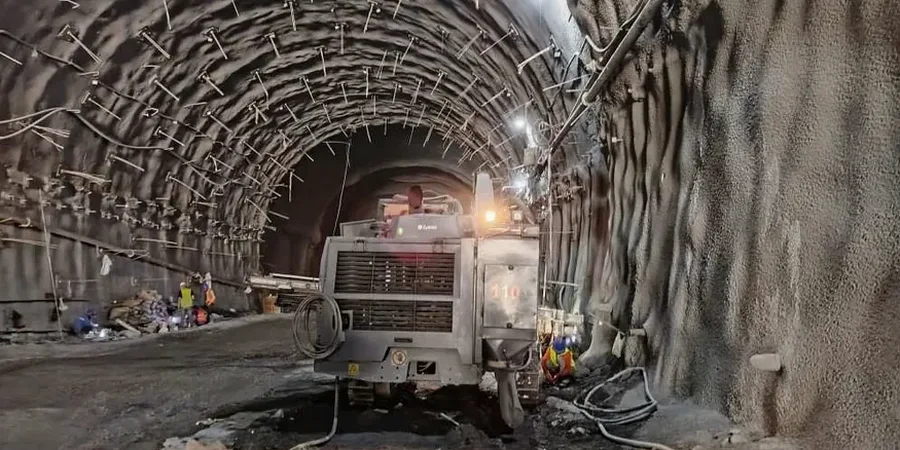
Belfast sits on a complex legacy of glacial till, soft alluvial clays, and the Sherwood Sandstone that underpins much of the city centre. At just 3 metres above sea level near the Lagan, groundwater complicates almost every excavation deeper than a basement. Our monitoring programmes across Belfast have tracked lateral movements exceeding 12 mm in retained cuts through the Belfast Sleech — that compressible estuarine silt notorious along the river corridor. When a contractor opens a 6-metre shaft off Great Victoria Street or underpins a listed façade in the Cathedral Quarter, real-time deformation data isn't optional. It is what keeps the job moving without surprises. We combine inclinometers, load cells, and automated total stations to give the project team a clear picture of ground response, often linking the monitoring plan with a deep excavation design review before the first bucket hits the ground.
In Belfast's soft estuarine clays, a 3 mm displacement trend over 24 hours can signal the difference between routine movement and a developing failure plane.